
Your heart races. Your thoughts spiral. The room feels like it's closing in. When anxiety or panic strikes, your nervous system floods with stress hormones that make rational thinking nearly impossible. The good news? Grounding techniques for anxiety can interrupt this cycle and bring you back to the present moment, often within minutes.
These techniques work by redirecting your brain's focus away from anxious thoughts and toward immediate sensory experiences. They're not about ignoring your feelings or pretending everything is fine. Instead, they give your mind an anchor when it feels like you're being swept away by overwhelming emotions.
At New Path Counseling, we teach these strategies to clients across Nebraska who struggle with anxiety, panic attacks, and trauma responses. The seven techniques below are ones our therapists recommend most often, practical tools you can use anywhere, whether you're at home, at work, or sitting in your car trying to gather yourself before walking into a stressful situation.
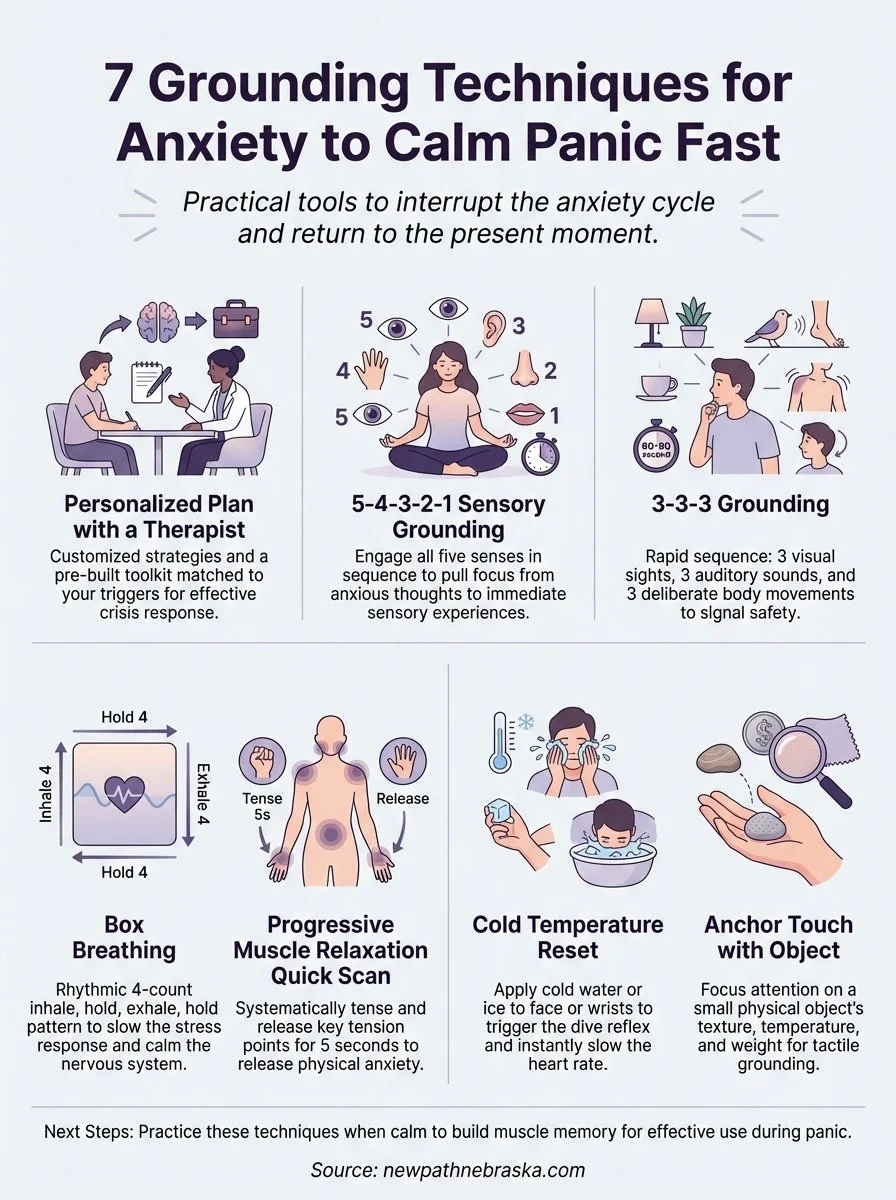
1. Create a personalized grounding plan with a therapist
Working with a trained therapist gives you customized strategies that match your specific anxiety triggers and nervous system responses. Instead of testing random techniques when you're in crisis, you'll have a pre-built toolkit you've already practiced in a safe environment. This preparation makes the techniques far more effective when panic actually hits.
What it is and why it works
A personalized grounding plan is a written document or mental map you develop with your therapist that outlines which techniques work best for your body and mind. Your therapist helps you identify your early warning signs of anxiety, then matches you with specific grounding techniques for anxiety that target your particular symptoms. Someone who experiences chest tightness might focus on breathing exercises, while someone with racing thoughts might need sensory anchors.
"When you practice these techniques in therapy first, your brain creates neural pathways that make them easier to access during actual panic."
The plan includes not just the techniques themselves, but also environmental cues that remind you to use them. You'll know exactly which method to reach for when you feel your heart rate spike versus when intrusive thoughts take over.
How to set it up for fast use during panic
Your therapist will help you create a physical or digital reminder system that you can access within seconds. Some clients keep a note card in their wallet, others set up a locked phone screen with instructions, and many use a small notebook. The key is immediate visibility when your thinking brain starts to shut down.
Practice each technique at least three to five times in session before you'll need it in real life. Your therapist will walk you through the steps slowly, then watch you do it independently. This rehearsal builds muscle memory that survives even severe anxiety episodes.
When to use it and who it helps most
This approach helps people who experience frequent panic attacks or who have complex trauma histories. You'll use your plan the moment you notice early anxiety symptoms, before full panic sets in. The personalized nature means it works especially well if you've tried generic coping strategies before and found them unhelpful.
Common pitfalls and how to adjust
Many people wait until they're in full panic mode to pull out their plan. Instead, practice using it when you're only mildly anxious so you build confidence. If a technique stops working after several uses, tell your therapist immediately so you can adjust your plan together. Your nervous system changes over time, and your grounding strategies should evolve with it.
2. 5-4-3-2-1 sensory grounding
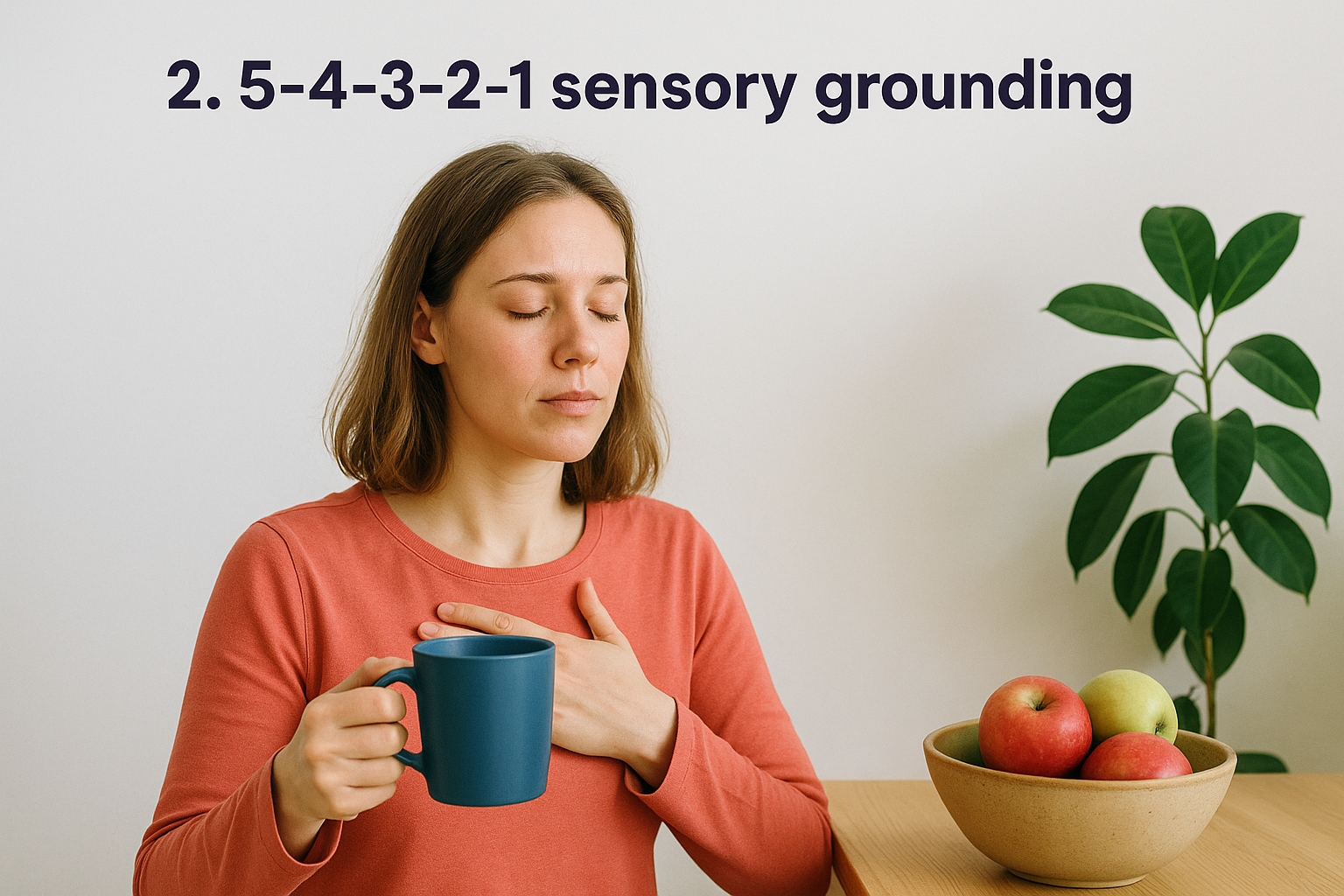
This technique pulls your attention away from anxious thoughts by engaging all five senses in sequence. You systematically identify five things you see, four you can touch, three you hear, two you smell, and one you taste. The countdown structure gives your mind a concrete task that interrupts panic cycles.
What it is and why it works
The 5-4-3-2-1 method anchors you in physical reality by forcing your brain to process immediate sensory information instead of ruminating on fear. When anxiety triggers fight-or-flight, your prefrontal cortex goes offline. Naming specific sensory details activates this region again, which helps restore rational thinking.
"Your nervous system can't fully panic and fully observe at the same time."
How to do it in under 2 minutes
Look around and name five objects you see out loud or silently. Identify four things you can physically touch (your chair, shirt fabric, the floor). Notice three distinct sounds, even quiet ones like electronics humming or distant traffic. Find two things you can smell (soap, coffee, fresh air). Name one thing you can taste, even if it's just the inside of your mouth.
When to use it and who it helps most
This works best during moderate anxiety or panic attacks where you can still think somewhat clearly. People who respond well to structure and step-by-step instructions find this particularly helpful. You can use it anywhere without drawing attention since it looks like you're just pausing to think.
Common pitfalls and how to adjust
Many people rush through the steps or skip difficult senses. Instead, take at least ten seconds per sense and get specific (say "blue mug with a chip" instead of just "mug"). If you can't identify a smell or taste, acknowledge that and move on rather than getting frustrated, which only increases anxiety.
3. 3-3-3 grounding for anxiety
The 3-3-3 technique offers a simplified alternative to the 5-4-3-2-1 method when you need something even faster. You identify three things you see, three sounds you hear, and move three body parts. This streamlined approach works when panic feels so overwhelming that a longer exercise seems impossible.
What it is and why it works
This technique combines visual awareness, auditory focus, and physical movement into one rapid sequence. The physical movement component adds a kinetic element that other grounding techniques for anxiety sometimes miss. When you move your body deliberately, you send signals to your brain that you're safe and in control, which directly counteracts the freeze response that often accompanies panic.
"Movement tells your nervous system you're taking action, not trapped."
How to do it in under 2 minutes
Name three objects in your field of vision, being as specific as possible (wooden desk, red coffee cup, white ceiling fan). Listen carefully and identify three distinct sounds, even subtle ones. Then move three body parts in sequence: wiggle your toes, roll your shoulders back, and turn your head from side to side. The entire process takes 60 to 90 seconds.
When to use it and who it helps most
You can deploy this technique during acute panic attacks when you feel frozen or disconnected from your body. People who feel trapped in their own thoughts respond particularly well to the movement component. The brevity makes it practical in public settings where you need discretion.
Common pitfalls and how to adjust
Many people rush through the movements so quickly they barely register. Instead, make each movement deliberate and slow, taking at least three full seconds per action. If you can't hear three sounds in a quiet environment, acknowledge the silence itself as one of your observations rather than forcing false answers.
4. Box breathing to slow the stress response
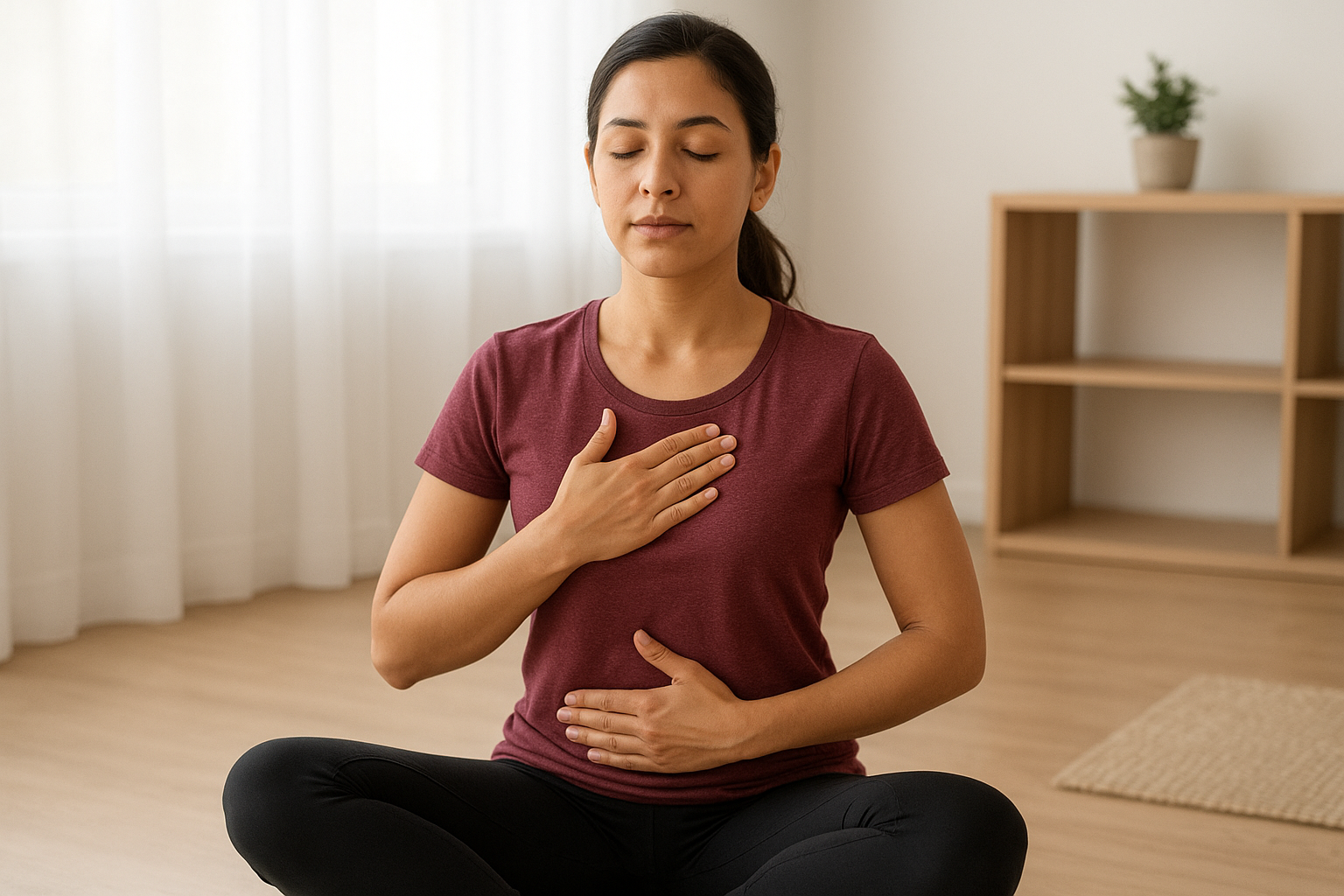
Box breathing creates a rhythmic pattern that directly influences your autonomic nervous system. You breathe in for four counts, hold for four, exhale for four, then hold empty for four. This equal timing creates a square pattern that gives the technique its name. Unlike other grounding techniques for anxiety, box breathing targets your physiology first, which then calms your mind.
What it is and why it works
The four-count pattern activates your parasympathetic nervous system, which controls your rest-and-digest response. When you extend your exhale and add pauses, you signal to your body that you're safe from danger. Your heart rate decreases, blood pressure drops, and stress hormones begin to clear from your bloodstream.
"Controlled breathing is one of the fastest ways to shift from fight-or-flight to calm."
How to do it in under 2 minutes
Inhale through your nose while counting to four. Hold your breath for four counts with your lungs full. Exhale slowly through your mouth for four counts, pushing out all the air. Hold your breath for four counts with lungs empty. Repeat this cycle four to six times, which takes about 90 seconds total.
When to use it and who it helps most
This technique works best when you need immediate physiological calm during anxiety spikes or before stressful events. People with racing hearts or chest tightness respond particularly well. You can practice it anywhere without anyone noticing.
Common pitfalls and how to adjust
Many people hold tension in their shoulders while breathing. Instead, keep your shoulders relaxed and let your belly expand on the inhale. If four counts feels too long, start with three-count cycles and gradually increase as your lung capacity improves.
5. Progressive muscle relaxation quick scan
Progressive muscle relaxation (PMR) helps you release physical tension that accumulates during anxiety by systematically tensing and relaxing muscle groups. Unlike full-body PMR sessions that take 15 to 20 minutes, the quick scan version targets key tension points in under two minutes. This abbreviated approach works as one of the most effective grounding techniques for anxiety when your body feels rigid or wound up.
What it is and why it works
The quick scan method focuses on your most common tension zones: jaw, shoulders, hands, and stomach. You deliberately tighten each area for five seconds, then release completely. This contrast helps your brain recognize where you're holding stress and teaches your muscles how to let go. The physical release triggers a relaxation response that counteracts the muscle tension anxiety creates.
"Your body can't maintain full tension and deep relaxation simultaneously."
How to do it in under 2 minutes
Clench your jaw tight for five counts, then release and let your mouth fall slightly open. Pull your shoulders up toward your ears for five counts, then drop them completely. Make tight fists with both hands for five counts, then spread your fingers wide. Finally, tense your stomach muscles for five counts, then let your belly soften. Each cycle takes roughly 30 seconds, allowing you to complete the full sequence twice.
When to use it and who it helps most
This technique works best when you notice physical symptoms like tight shoulders, clenched jaw, or stomach knots. People who carry stress in their body rather than their mind respond particularly well. You can practice it at your desk, in your car, or anywhere you have brief privacy.
Common pitfalls and how to adjust
Many people tense too lightly to feel a difference. Instead, squeeze each muscle group at about 70% of your maximum strength. If you can't isolate specific muscles, focus on whichever areas feel most tense rather than forcing the prescribed sequence.
6. Cold temperature reset with water or ice
Sudden cold exposure activates your dive reflex, a physiological response that immediately slows your heart rate and redirects blood flow. This technique bypasses your thinking brain entirely and creates an instant physiological shift that interrupts panic. The shock of cold sensation forces your nervous system to refocus on your body's immediate needs rather than anxious thoughts.
What it is and why it works
Cold temperature reset involves applying cold water or ice to specific parts of your body, particularly your face, neck, or wrists. The cold triggers your vagus nerve, which controls your parasympathetic nervous system. Within seconds, your body shifts from fight-or-flight into a calmer state. This makes it one of the fastest-acting grounding techniques for anxiety available.
"Cold water creates an immediate physiological interrupt that anxiety can't override."
How to do it in under 2 minutes
Splash cold water on your face three times, or hold an ice cube against your wrists or temples for 30 seconds. You can also fill a bowl with ice water and submerge your face for 10 to 15 seconds. The colder the water, the stronger the response. Most people feel noticeable relief within 30 to 60 seconds.
When to use it and who it helps most
This technique works best during intense panic attacks when other methods feel too slow. People who experience hot flashes, racing hearts, or dissociation respond particularly well. You need access to cold water or ice, which limits portability but makes it ideal for home or workplace use.
Common pitfalls and how to adjust
Many people use lukewarm water that doesn't trigger the dive reflex. Instead, make the water as cold as you can tolerate. If ice feels too intense, start with cold tap water and gradually work toward colder temperatures as you build tolerance.
7. Anchor touch with a small object
Carrying a small physical object that you can touch during anxiety provides an instant sensory anchor. This technique leverages tactile grounding to pull your attention away from racing thoughts and onto something concrete you can feel in your hand. Unlike other grounding techniques for anxiety, this one requires preparation but offers portability and discretion once you've chosen your anchor object.
What it is and why it works
An anchor object is any small item you keep with you specifically for anxiety management: a smooth stone, a textured coin, a piece of soft fabric, or a small fidget tool. When you hold and manipulate this object during panic, your brain receives strong tactile signals that compete with anxious thoughts for attention. The familiarity of your chosen object also creates a sense of safety and predictability.
"A physical anchor gives your mind something concrete to hold onto when thoughts feel uncontrollable."
How to do it in under 2 minutes
Place your anchor object in your pocket or bag where you can reach it instantly. When anxiety hits, wrap your hand around it and focus on its temperature, texture, weight, and shape. Trace its edges with your fingers, notice if it's smooth or rough, and feel how it sits in your palm. Spend at least 60 seconds exploring every detail.
When to use it and who it helps most
This technique works best for situational anxiety when you need something subtle, like during meetings or social events. People who respond well to physical touch or who feel self-conscious about visible coping strategies find this particularly helpful.
Common pitfalls and how to adjust
Many people choose objects that lack distinct textures or features. Instead, select something with varied surfaces or interesting shapes that give your fingers plenty to explore. If your object loses effectiveness over time, switch to a different one to maintain novelty.
Next steps
You now have seven practical grounding techniques for anxiety that work in different situations and match different nervous system responses. The key to making these strategies effective is consistent practice when you're calm, not just during crisis moments. Your brain learns best through repetition in low-stress environments, which builds the neural pathways you'll need when panic actually strikes.
Start by choosing two or three techniques that feel most natural to your body and mind. Test each one several times this week during mild stress to see which creates the strongest sense of relief. Some people respond better to physical techniques like cold water or muscle relaxation, while others need sensory anchors like the 5-4-3-2-1 method.
If anxiety continues to disrupt your daily life despite practicing these tools, professional support makes a significant difference. The therapists atNew Path Counseling help clients throughout Nebraska develop personalized anxiety management plans that go beyond basic coping strategies, addressing the root causes while building sustainable skills for long-term relief.