
10 Stress Management Techniques for Daily Stress Relief Now
Stress shows up uninvited. It creeps into your morning commute, your work deadlines, your relationships, and even your quiet moments at home. While you can't eliminate stress entirely, you can learn stress management techniques that help you respond differently when pressure builds.
You're here because you want real solutions, not vague advice about "taking it easy" or "thinking positive." You need practical coping mechanisms and daily habits that actually work when your heart races, your thoughts spiral, or your patience runs thin. The good news? Effective stress relief doesn't require hours of meditation or expensive retreats.
At New Path Counseling, we work with adults, teens, and children across Nebraska who face stress from all angles, work pressure, family dynamics, academic demands, and everything in between. This article shares 10 evidence-based techniques our clinical team recommends to clients every day. Whether you're managing chronic stress or just need tools for tough moments, these strategies can help you build resilience and reclaim a sense of control.
1. Work with a therapist for a personalized stress plan
Professional therapy gives you individualized stress management techniques tailored to your specific triggers, thought patterns, and life circumstances. Unlike generic advice, a therapist helps you identify the root causes of your stress and builds a customized plan that addresses your unique situation. At New Path Counseling, our clinical team works with clients to develop strategies that fit their daily routines, relationships, and mental health needs.
Why it works
Therapists use evidence-based approaches like cognitive behavioral therapy (CBT), acceptance and commitment therapy (ACT), and dialectical behavior therapy (DBT) to help you understand and manage stress. These methods teach you how to recognize distorted thinking patterns, regulate emotional responses, and develop coping skills that actually stick. A trained professional can spot patterns you might miss on your own and provide accountability as you practice new habits.
Working with a therapist means you get real-time feedback on what's working and what needs adjustment, something self-help books can't provide.
How to do it step by step
Start by scheduling an initial consultation with a licensed therapist who specializes in stress, anxiety, or the specific issues you face. During your first few sessions, you'll discuss your stress triggers, current coping methods, and goals for treatment. Your therapist will then create a treatment plan that might include relaxation techniques, thought restructuring exercises, or behavioral experiments. You'll practice these strategies between sessions and report back on what helps, allowing your therapist to adjust your plan based on real results.
When it helps most
Therapy proves particularly valuable when stress feels overwhelming or when you've tried self-help strategies without lasting improvement. It helps most if you're dealing with chronic stress, major life transitions, relationship conflicts, or trauma that keeps resurfacing. Therapy also works well when stress impacts your sleep, work performance, or physical health, or when you notice yourself turning to unhealthy coping methods.
Make it a habit
Commit to attending sessions consistently, typically weekly or biweekly, rather than only when you're in crisis. Between appointments, practice the specific techniques your therapist assigns, even when stress feels manageable. Consider teletherapy options if scheduling in-person visits proves difficult. Track your progress in a journal so you can discuss what's helping during your next session.
2. Use box breathing to calm your body fast
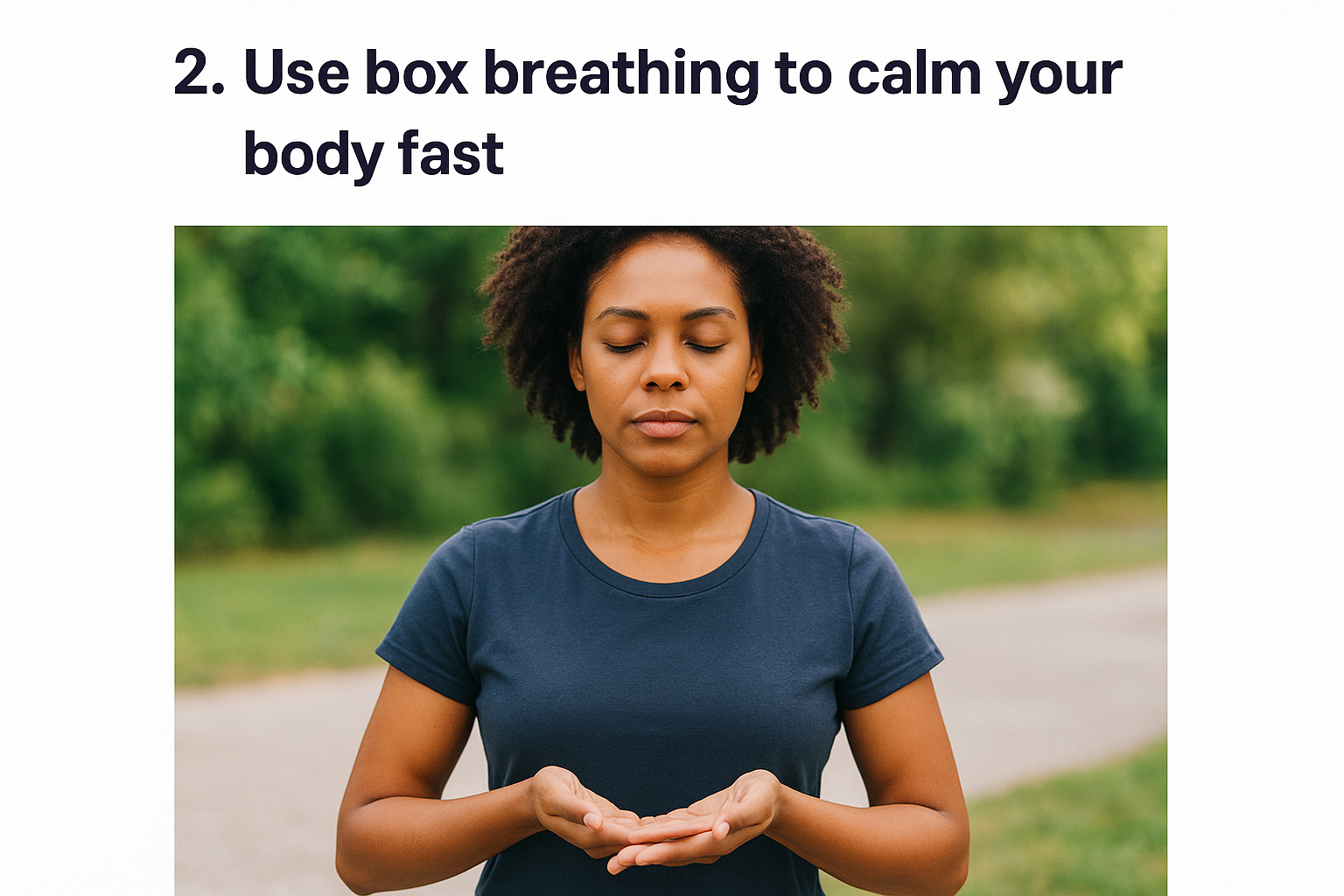
Box breathing (also called square breathing) gives you immediate control over your stress response by regulating your nervous system through a simple four-count pattern. This technique requires no equipment or special location, making it one of the most accessible stress management techniques you can use anywhere. Navy SEALs rely on this method duringhigh-pressure situations because it quickly shifts your body from fight-or-flight mode into a calmer state.
Why it works
Box breathing activates your parasympathetic nervous system, which counteracts the physiological stress response. When you breathe in a slow, controlled pattern, you send signals to your brain that the immediate threat has passed, which lowers your heart rate and blood pressure. The four-equal-counts structure keeps your mind focused on counting instead of spiraling into anxious thoughts.
Controlled breathing physically interrupts the stress cycle by changing the chemical balance in your bloodstream.
How to do it step by step
Find a comfortable position sitting or standing. Inhale through your nose for four counts, feeling your belly expand. Hold that breath for four counts without straining. Exhale slowly through your mouth for four counts, emptying your lungs completely. Hold empty for four counts before starting the next cycle. Repeat this pattern for two to five minutes or until you notice your body relaxing.
When it helps most
This technique works best during acute stress moments like before a difficult conversation, during a panic attack, or when you feel your emotions escalating. Box breathing helps immediately after you receive bad news or when racing thoughts keep you awake at night. Use it in the car before walking into a stressful meeting or between tasks when you notice tension building.
Make it a habit
Practice box breathing twice daily during calm moments so your body recognizes the pattern when stress hits. Set phone reminders for mid-morning and late afternoon practice sessions. Keep the technique ready by practicing during your commute, while waiting in line, or during commercial breaks. The more you practice during low-stress times, the more automatic it becomes during high-stress situations.
3. Try progressive muscle relaxation for physical tension
Progressive muscle relaxation (PMR) teaches you to release physical tension you might not realize you're holding in your neck, shoulders, jaw, or back. This technique works by systematically tensing and releasing different muscle groups, which helps you recognize the difference between tension and relaxation. Many people carry stress in their bodies without noticing until pain or discomfort forces them to pay attention.
Why it works
When you deliberately tense muscles before releasing them, you create a deeper sense of relaxation than simply trying to "relax" without preparation. Your nervous system responds to this contrast by lowering overall muscle tension throughout your body. PMR also forces your attention away from racing thoughts and onto physical sensations, which interrupts the mental spiral that often accompanies stress.
Tensing before releasing helps your body understand what true relaxation feels like.
How to do it step by step
Start with your feet by curling your toes tightly for five seconds, then releasing completely for 10 seconds. Move up to your calves by flexing your feet, holding, then releasing. Continue upward through your thighs, abdomen, hands, arms, shoulders, neck, and face. At each muscle group, tense for five seconds and release for 10, noticing the difference between the two states. Complete the full sequence in about 10 to 15 minutes.
When it helps most
PMR works best for chronic muscle tension caused by prolonged stress or poor posture during work. Use it when your shoulders feel tight by the end of the day or when tension headaches start building. This technique helps before bed if physical tension keeps you from falling asleep.
Make it a habit
Schedule PMR sessions before bedtime three times per week to start. Set aside 15 minutes in a quiet space where you won't be interrupted. As you become familiar with the technique, focus on specific problem areas like your jaw or shoulders during brief practice sessions throughout the day.
4. Move your body in short bursts every day

Physical movement disrupts your stress response by burning through stress hormones like cortisol and adrenaline that build up in your system. You don't need hour-long gym sessions or complicated routines to experience immediate stress relief. Short bursts of activity scattered throughout your day provide cumulative benefits that match or exceed longer workouts, making this one of the most practical stress management techniques for busy schedules.
Why it works
Exercise triggers your body to release endorphins and dopamine, which naturally counteract stress chemicals. Movement also redirects your focus from anxious thoughts to physical sensations, giving your mind a break from rumination. Your cardiovascular system responds by improving blood flow to your brain, which enhances your ability to think clearly under pressure.
Even five minutes of movement changes your brain chemistry and interrupts the stress cycle.
How to do it step by step
Start with five-minute movement breaks every two hours during your workday. Walk around your building, do jumping jacks in place, climb stairs, or stretch at your desk. Choose activities that raise your heart rate slightly without requiring equipment or special clothing. Set phone alarms to remind yourself until the habit sticks.
When it helps most
Movement works best when you notice tension building during long meetings or after sitting for extended periods. Use it immediately after stressful phone calls or when you feel your energy dropping mid-afternoon. Physical activity helps most during transitions between tasks when stress tends to accumulate unnoticed.
Make it a habit
Schedule movement breaks into your daily calendar like any other appointment. Keep comfortable shoes at work so you can walk during lunch. Track your activity for one week to identify natural break points in your routine where movement fits easily.
5. Build a sleep routine that protects your nervous system
Poor sleep amplifies your stress response, creating a cycle where stress disrupts rest and inadequate rest increases stress sensitivity. A consistent sleep routine gives your nervous system predictable recovery time, which reduces cortisol levels and improves your emotional regulation during waking hours. Among all stress management techniques, protecting your sleep delivers compound benefits that accumulate over days and weeks.
Why it works
Your nervous system repairs itself during deep sleep stages, processing emotional experiences and clearing stress hormones from your brain. Consistent sleep timing synchronizes your circadian rhythm, which regulates everything from hormone production to immune function. When your body expects rest at specific times, it begins preparing hours in advance by lowering cortisol and raising melatonin naturally.
Regular sleep schedules teach your body when to activate stress responses and when to shut them down.
How to do it step by step
Choose a fixed bedtime and wake time that allows seven to nine hours of sleep, then stick to these times even on weekends. Create a 30-minute wind-down routine that includes dimming lights, avoiding screens, and engaging in quiet activities like reading or gentle stretching. Keep your bedroom cool (around 65-68°F) and eliminate light sources that disrupt melatonin production.
When it helps most
Sleep routines prove essential when chronic stress has already disrupted your rest patterns or when you notice increased irritability and poor concentration. This approach helps most if you experience racing thoughts at bedtime or if stress causes middle-of-the-night awakenings.
Make it a habit
Set phone alarms for your wind-down routine start time, not just your wake time. Track your sleep for two weeks to identify patterns in how different bedtimes affect your stress levels the next day.
6. Use journaling to spot triggers and patterns
Writing down your thoughts and stress responses creates a written record that reveals patterns you might miss when emotions run high. Journaling transforms vague feelings of overwhelm into concrete data you can analyze and address. Unlike talking about stress, which happens in real time without documentation, journaling gives you the ability to review your experiences and identify what consistently triggers your stress response.
Why it works
Journaling moves thoughts from your head onto paper, which reduces mental clutter and creates distance between you and your stress. Writing engages different parts of your brain than ruminating does, interrupting the cycle of repetitive worry. When you review past entries, you spot recurring themes that point to specific stressors, thought patterns, or situations that need attention.
Documenting your stress in writing transforms abstract anxiety into specific problems you can solve.
How to do it step by step
Keep a notebook or digital document dedicated to stress tracking. Each day, write for five to ten minutes about situations that triggered stress, how your body responded, and what thoughts ran through your mind. Note the time, location, and circumstances surrounding each stressful moment. After two weeks, review your entries and highlight repeated triggers or patterns.
When it helps most
Journaling helps most when stress feels overwhelming but unclear, or when you can't pinpoint why certain situations consistently drain you. This technique works well if you notice yourself reacting strongly to specific people, environments, or tasks but can't articulate why.
Make it a habit
Set aside the same time daily for journaling, preferably in the evening when you can reflect on the full day. Keep your journal accessible so you can capture stressful moments immediately if needed.
7. Set boundaries and simplify your schedule
Overcommitment creates a constant state of stress by forcing you to split your attention across too many obligations, relationships, and tasks. Setting clear boundaries and simplifying your schedule gives you permission to say no to demands that drain your energy without providing meaningful benefit. This approach differs from other stress management techniques because it addresses the source of stress rather than just managing your reaction to it.
Why it works
When you eliminate unnecessary commitments, you create mental space for recovery and meaningful work. Your stress response stays activated when your brain perceives threats to your time and energy, and saying yes to everything keeps that alarm system running constantly. Boundaries teach others how to interact with you while protecting the time you need for rest, relationships, and activities that matter most.
Clear boundaries reduce decision fatigue by eliminating the constant negotiation between your needs and others' demands.
How to do it step by step
List all your current commitments and rate each one as essential, important, or optional. Identify optional commitments you can drop immediately and important ones you can delegate or reduce. Practice saying "I need to check my schedule" instead of immediately agreeing to new requests, which gives you time to evaluate if something truly deserves your attention. Start declining requests that conflict with your priorities without offering lengthy explanations.
When it helps most
Boundary-setting helps most when you notice resentment building toward people or activities that used to feel manageable. Use this approach when your schedule leaves no time for basic self-care or when stress comes from feeling pulled in too many directions simultaneously.
Make it a habit
Block out non-negotiable personal time in your calendar each week before scheduling other commitments. Review your schedule monthly to identify commitments that no longer serve your wellbeing or goals.
8. Reframe stressful thoughts with CBT-style questions
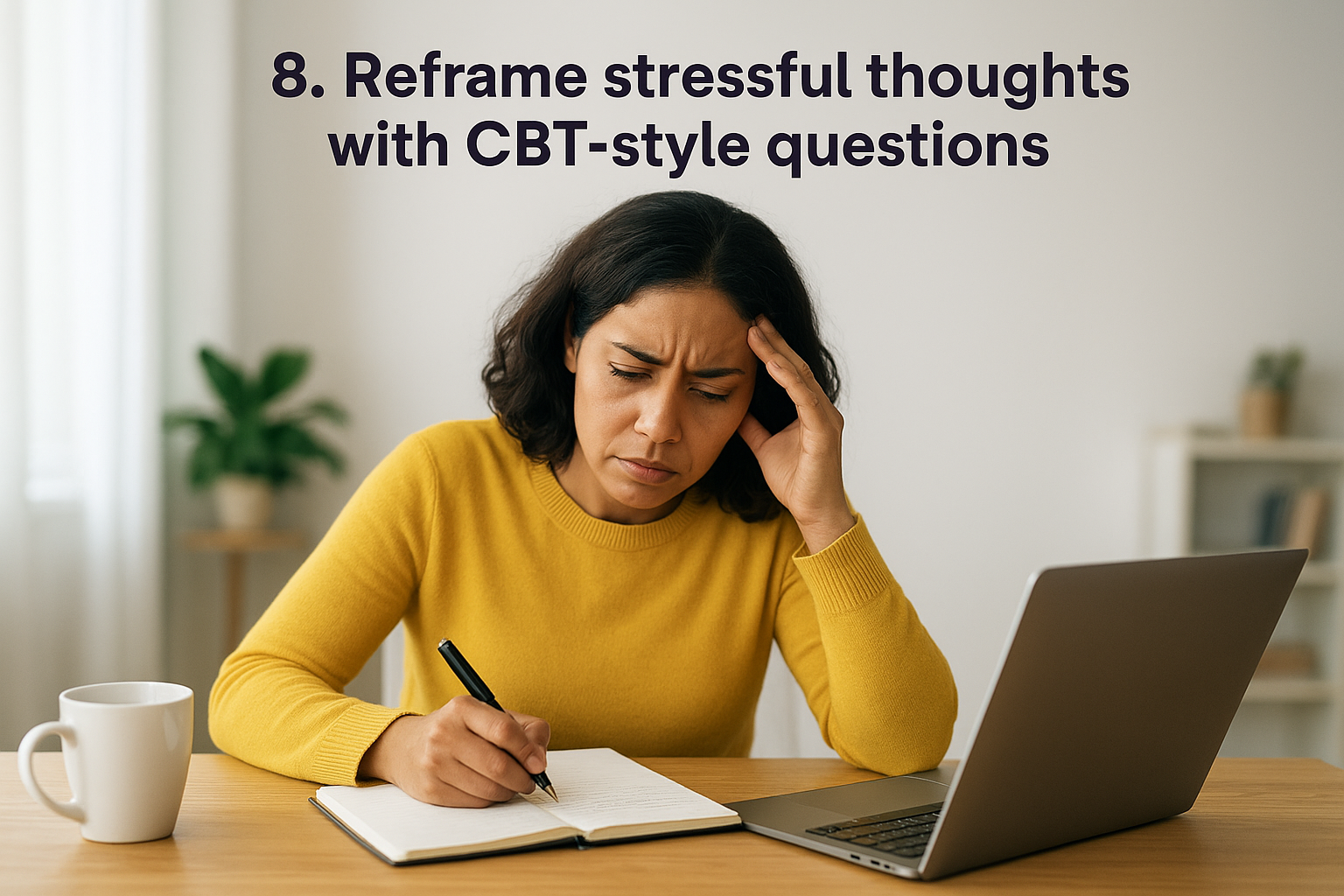
Cognitive behavioral therapy (CBT) teaches you to challenge automatic thoughts that escalate stress rather than accepting them as absolute truth. This technique gives you a structured way to question your assumptions and replace distorted thinking with more balanced perspectives. Among stress management techniques, thought reframing addresses the mental patterns that transform manageable situations into sources of overwhelming anxiety.
Why it works
Your thoughts directly influence your stress response by interpreting situations as threatening or manageable. CBT-style questions interrupt catastrophic thinking patterns by forcing you to examine evidence for and against your stressed thoughts. When you question whether your fears are realistic, you often discover that your initial interpretation exaggerated the actual threat. This process reduces the intensity of your emotional response and helps you respond more effectively to real challenges.
Challenging your thoughts doesn't mean ignoring problems, it means responding to them accurately instead of emotionally.
How to do it step by step
When you notice stress building, write down the specific thought causing distress. Ask yourself: "What evidence supports this thought? What evidence contradicts it?" Then question: "Is there another way to interpret this situation? What would I tell a friend thinking this way?" Finally, create a balanced alternative thought that acknowledges reality without catastrophizing. Practice this sequence until questioning your thoughts becomes automatic.
When it helps most
Thought reframing helps most when stress comes from worry about future events or rumination about past situations. Use this technique when you catch yourself thinking in absolutes like "always," "never," or "everyone."
Make it a habit
Keep a thought log for two weeks where you practice reframing at least one stressful thought daily. Review your log weekly to identify recurring distortions in your thinking patterns.
9. Connect with supportive people on purpose
Social isolation amplifies stress while meaningful connections buffer against it, but you need to actively build relationships rather than waiting for support to appear naturally. Intentional connection means reaching out to specific people who understand you, scheduling regular time together, and being honest about what you're experiencing. Unlike casual socializing, purposeful connection focuses on quality interactions with people who help you feel grounded rather than drained.
Why it works
Human brains are wired for social connection as a survival mechanism, and talking through stress with trusted people activates your body's calming response. Supportive relationships provide perspective and validation that helps you process difficult emotions instead of bottling them up. When someone listens without judgment, your nervous system receives signals that you're safe, which reduces cortisol levels and helps you think more clearly.
Sharing stress with the right people transforms it from an isolating burden into a manageable challenge.
How to do it step by step
Identify three people who listen without immediately offering solutions or minimizing your concerns. Reach out to one person each week through a phone call, video chat, or in-person meeting specifically to discuss what's stressing you. Be direct about needing support by saying "I'm dealing with stress and need to talk" rather than waiting for them to guess what you need.
When it helps most
Intentional connection helps most when you notice yourself withdrawing from relationships during high-stress periods or when stress makes you feel isolated. This approach works best if you tend to handle everything alone or if loneliness intensifies your stress response.
Make it a habit
Schedule recurring connection time in your calendar with specific people rather than leaving it to chance. Send a brief text to one supportive person daily to maintain the relationship during less stressful times.
10. Limit stimulants, alcohol, and doomscrolling
Caffeine, alcohol, and excessive screen time create a chemical and psychological stress cycle that keeps your nervous system activated long after stressful events pass. While these substances and habits might feel like they provide relief, they actually amplify your stress response by disrupting sleep, increasing anxiety, and preventing your body from returning to baseline calm. Cutting back on these inputs removes hidden stressors that work against other stress management techniques you're practicing.
Why it works
Caffeine keeps cortisol elevated for hours after consumption, which maintains your fight-or-flight response even when no actual threat exists. Alcohol disrupts your sleep architecture, preventing the deep rest your nervous system needs to process stress effectively. Scrolling through negative news or social media (doomscrolling) keeps your brain in a state of vigilance by constantly exposing you to threatening information, which your nervous system treats as real dangers requiring immediate response.
Reducing these inputs allows your nervous system to return to baseline instead of staying perpetually activated.
How to do it step by step
Cut off caffeine consumption six hours before bedtime and track how your sleep quality changes over two weeks. Replace evening alcohol with herbal tea or sparkling water to break the habit loop. Set specific time limits on social media apps and use screen time tracking to hold yourself accountable. Delete news apps from your phone and check updates only once daily at a designated time.
When it helps most
This approach helps most when you notice sleep problems or increased anxiety despite practicing other stress techniques. Limiting these inputs works best if you rely on coffee to function, use alcohol to unwind, or find yourself scrolling mindlessly when stressed.
Make it a habit
Replace your afternoon coffee with a brief walk or cold water. Schedule a 30-minute screen-free wind-down before bed starting tonight.
Your next step
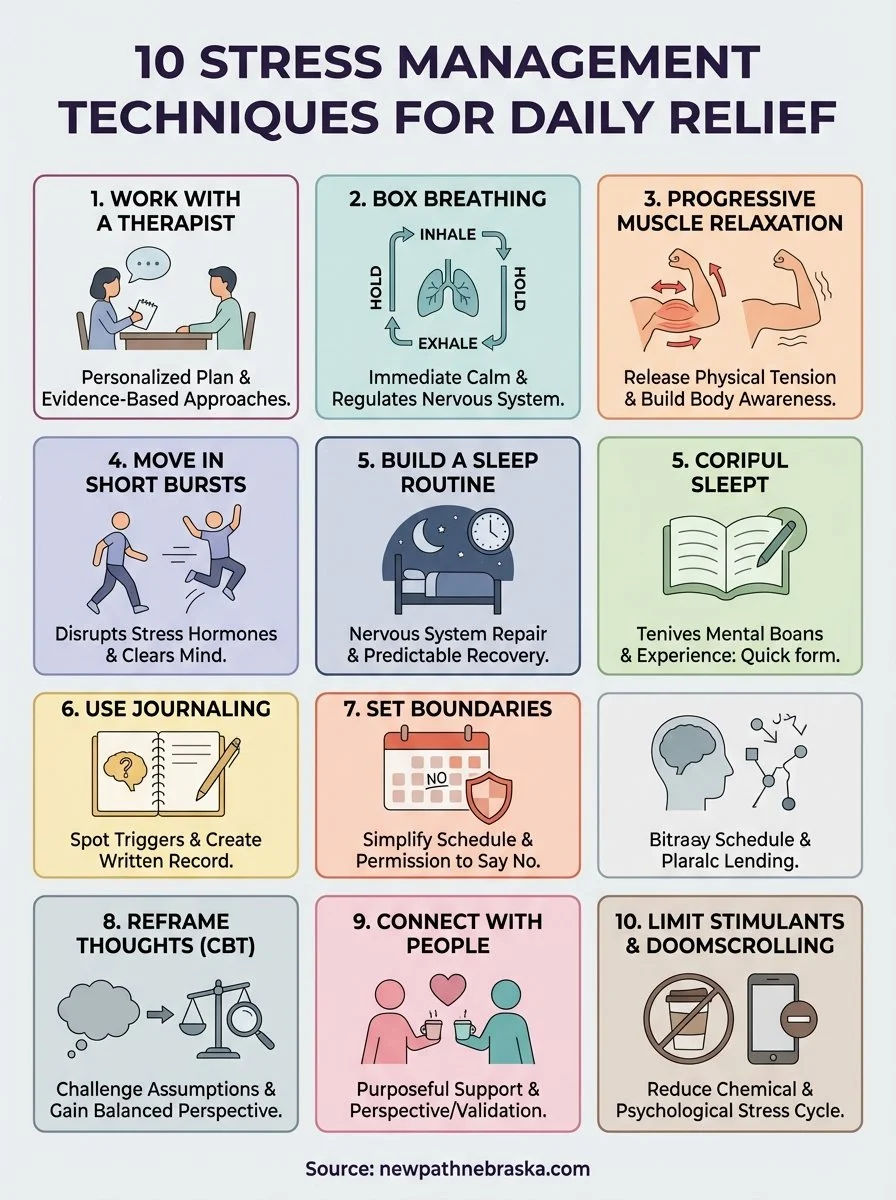
These stress management techniques work best when you practice them consistently rather than waiting for stress to overwhelm you. Pick two or three strategies from this list that feel manageable and start implementing them this week. Track what helps and adjust your approach based on results, not what sounds good in theory.
Some people find relief through breathing exercises and journaling, while others need professional guidance to address underlying patterns that fuel chronic stress. If you've tried multiple strategies without lasting improvement, or if stress impacts your work, relationships, or physical health, working with a therapist changes the trajectory of your recovery.
AtNew Path Counseling, our clinical team helps clients across Nebraska develop personalized stress management plans through both in-person and teletherapy services. You don't need to figure this out alone. Schedule a consultation to build a strategy that fits your specific triggers, schedule, and goals for daily stress relief.