
You're showing up to work, meeting deadlines, and maintaining relationships, yet something feels fundamentally off. This is exactly what therapy for high-functioning depression addresses: that persistent, low-grade struggle hiding behind a mask of productivity. People living with this condition rarely "look" depressed, which can make seeking help feel confusing or even unwarranted.
The truth is, struggling while still functioning doesn't mean your experience is less valid. Recognizing the signs early and understanding your treatment options can be the first step toward feeling like yourself again. The right therapeutic approach provides targeted support for people who appear fine on the outside but carry a quiet heaviness that never quite lifts.
At New Path Counseling, we work with adults, teens, and families across Nebraska who face exactly this challenge, through both in-person sessions and teletherapy. This guide breaks down the types of therapy that help, how to identify high-functioning depression in yourself or someone you care about, and practical coping strategies you can start using right away.
High functioning depression vs burnout, ADHD, and PDD
You might wonder if what you're experiencing is actually depression or something else entirely. Distinguishing between high functioning depression and similar conditions matters because each one responds to different interventions. The overlapping symptoms can make it hard to pinpoint what's really going on, especially when you're still managing your daily responsibilities.
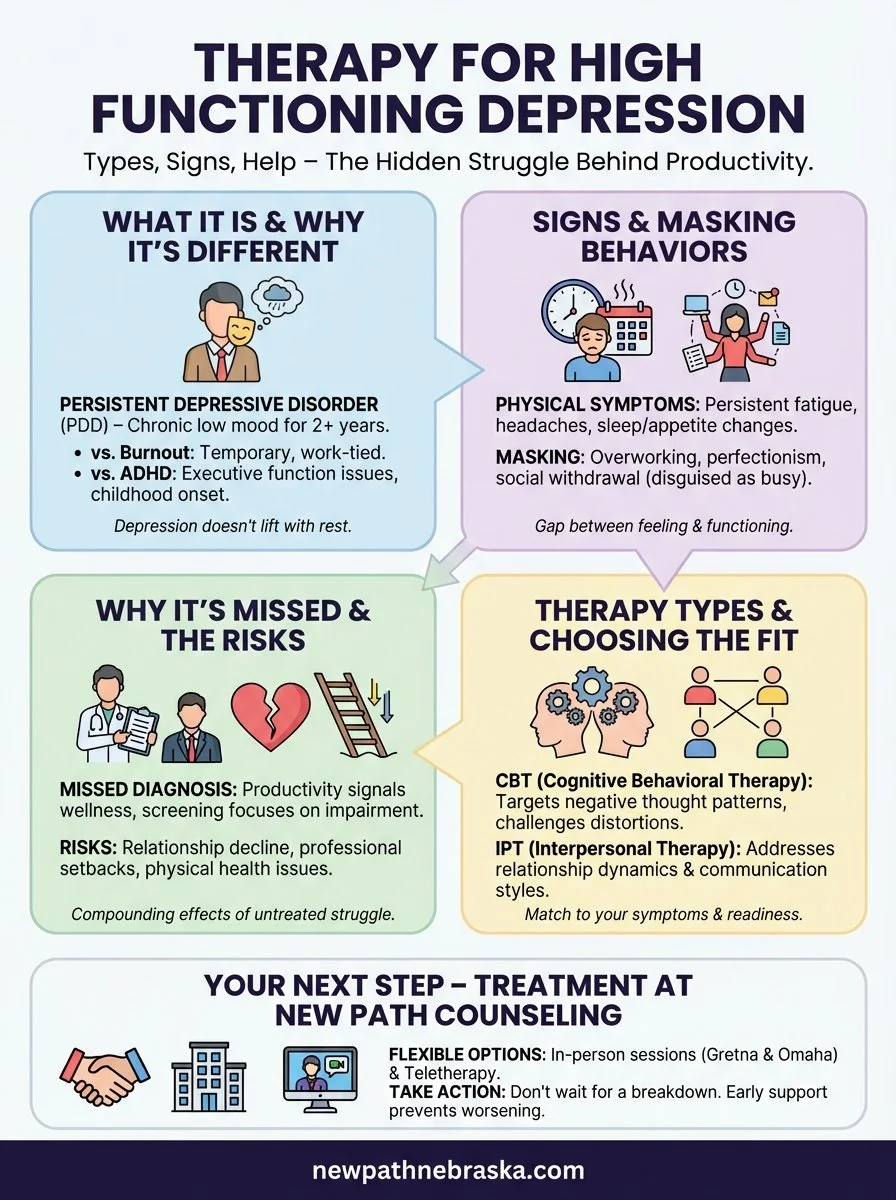
Burnout feels temporary, depression doesn't lift
Burnout stems from prolonged workplace stress and typically improves with rest, boundaries, or a job change. You'll notice burnout affects specific areas of your life, usually tied to work or caregiving roles. Depression, by contrast, seeps into every corner of your existence, persisting even when external stressors ease. Your sleep suffers, relationships feel hollow, and activities that once brought joy now feel pointless, regardless of how much time off you take.
Depression doesn't respond to a vacation the way burnout does. It requires targeted intervention, not just environmental changes.
ADHD mimics depression but the root cause differs
ADHD creates executive function challenges that can look like depression: missed deadlines, difficulty focusing, and a sense of underachievement. The key difference lies in the timeline and nature of symptoms. If you've struggled with attention and impulse control since childhood, ADHD might be the primary issue. Depression typically has a clearer onset point and affects your mood and motivation more than your ability to organize thoughts or filter distractions.
PDD is the clinical name for persistent low mood
Persistent Depressive Disorder (PDD), sometimes called dysthymia, is the formal diagnosis for what many people call high functioning depression. You experience depressed mood most days for at least two years, along with symptoms like low energy, poor concentration, or feelings of hopelessness. Unlike major depression, PDD doesn't always knock you off your feet, but it creates a constant background hum of emotional flatness. Therapy for high functioning depression often targets PDD specifically, using approaches that address both the chronic nature and the functional impact of your symptoms.
Signs, masking behaviors, and red flags
You might recognize yourself in symptoms that don't match the typical depression narrative. High functioning depression shows up differently because you've learned to compensate and push through. The signs appear in subtle shifts rather than obvious breakdowns, making them easy to dismiss as stress or just being tired.

Physical symptoms that don't match your output
Your body tells a different story than your calendar. You experience persistent fatigue that sleep doesn't fix, yet you still make it to every meeting and obligation. Headaches, digestive issues, or muscle tension become your baseline normal. Changes in appetite or sleep patterns develop gradually, often blamed on busy schedules rather than recognized as depression markers.
When your body consistently signals distress but you keep performing, that gap between feeling and functioning is the hallmark of high functioning depression.
Masking behaviors that keep others from noticing
You've developed specific strategies to hide how you really feel. Overworking or perfectionism creates the appearance of thriving while actually serving as distraction from emotional pain. Social withdrawal gets disguised as "being busy," and you decline invitations with perfectly reasonable excuses. Irritability or mood swings emerge behind closed doors with people closest to you, while colleagues see only your professional mask. Therapy for high functioning depression specifically addresses these adaptive behaviors that, while protective short-term, prevent genuine healing.
Why it gets missed and the cost of pushing through
Your ability to function becomes the very reason your depression goes unrecognized. Healthcare providers often screen for severe impairment, asking if you can get out of bed or maintain employment, and when you answer yes, depression gets ruled out. You yourself might dismiss the struggle because productivity signals wellness in your mind, creating a dangerous feedback loop where appearing capable prevents you from getting help.
Medical and mental health professionals overlook functioning as health
Clinicians trained to identify crisis-level symptoms can miss moderate but chronic depression entirely.Standard screening tools focus on inability to work or complete basic tasks, not the internal experience of someone who powers through despite profound emptiness. Your doctor sees lab results within normal ranges and attributes fatigue to lifestyle factors. Mental health intake forms rarely capture the nuance of appearing fine while feeling terrible, which means therapy for high functioning depression requires you to articulate symptoms that don't match the expected presentation.
The compounding effects of untreated depression
Pushing through without treatment creates a cascade of consequences that worsen over time. Your relationships suffer as emotional unavailability becomes your default state, even when you're physically present. Performance at work eventually declines despite heroic effort, leading to professional setbacks that fuel self-criticism and shame. Physical health deteriorates through stress-related conditions, sleep disruption, and neglected self-care.
The longer you maintain the appearance of functioning without addressing underlying depression, the harder recovery becomes and the more areas of life get damaged in the process.
Therapy types and how to choose the right fit
Different therapeutic approaches work for different people, and understanding your options helps you make an informed choice about therapy for high functioning depression. The most effective treatment depends on your specific symptoms, lifestyle, and what feels comfortable for you. You don't need to commit to one approach forever, as many therapists integrate multiple methods based on what you respond to best.

CBT targets thought patterns that maintain depression
Cognitive Behavioral Therapy (CBT) helps you identify and challenge negative thought loops that fuel your depression. Your therapist teaches you to recognize distortions like all-or-nothing thinking or catastrophizing, then replace them with more balanced perspectives. CBT works well if you notice your depression centers around self-criticism, perfectionism, or persistent worry about performance and achievement.
Interpersonal therapy addresses relationship patterns
Interpersonal Therapy (IPT) focuses on how your relationships contribute to depression and how depression affects those connections. You explore communication styles, role transitions, grief, or conflicts that maintain your low mood. IPT suits you if relationship stress triggers or worsens your symptoms, or if you struggle with emotional expression and boundary setting.
The right therapy type addresses both your symptoms and the underlying patterns keeping you stuck, not just surface-level coping.
Match treatment to your readiness and goals
Choose based on what resonates with your experience rather than what sounds most impressive. If you want practical tools quickly, CBT provides structured techniques. If you need to process emotions and relationship dynamics, IPT or psychodynamic approaches offer deeper exploration. Your current capacity matters too: highly structured therapy works when you need concrete steps, while open-ended talk therapy fits when you need space to explore.
What treatment can look like in Gretna or Omaha
Starting therapy for high functioning depression in Nebraska means you have flexible options that fit your schedule and comfort level. New Path Counseling offers both in-person sessions at ourGretna and Omaha offices and teletherapy from anywhere you feel comfortable. Your initial appointment involves a clinical interview where you describe your symptoms, how long they've been present, and what brings you in now.
Choosing between office visits and teletherapy
You can start withface-to-face sessions at either location if you prefer the structure of a dedicated therapy space away from home. Our offices provide a private environment where you can focus entirely on your treatment without household distractions. Teletherapy works equally well for those with demanding schedules, transportation challenges, or who simply feel more open when speaking from home. Many clients begin in-office to establish rapport, then switch to video sessions as their schedule requires.
Building your treatment plan collaboratively
Your therapist develops apersonalized approach based on your specific symptoms and goals rather than applying a one-size-fits-all protocol. Sessions typically occur weekly at first, with frequency adjusted as you progress. You work together on identifying triggers, developing coping strategies, and addressing the thought patterns or relationship dynamics maintaining your depression. Treatment length varies, but most people notice meaningful changes within three to four months of consistent participation.
Your next step
You've read about the signs, understood the treatment types, and learned what distinguishes high functioning depression from other conditions. The knowledge itself doesn't create change, though. Taking action means acknowledging that your experience deserves professional attention, regardless of how well you're managing daily responsibilities. Your symptoms won't resolve simply because you understand them better or because you're still showing up to work.
Starting therapy for high functioning depression doesn't require waiting until things get worse or until you can't function anymore. Reaching out now prevents the compounding effects we discussed and gives you tools before the struggle intensifies. New Path Counseling provides both in-person sessions in Gretna and Omaha, plus teletherapy options that fit your schedule.Schedule your first appointment at New Path Counseling to begin working with a therapist who understands the unique challenge of appearing fine while feeling anything but.